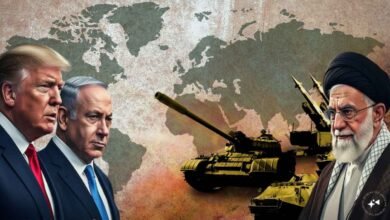
Middle East War Begins to Hit Global Oil Supply as Kuwait Cuts Production
Fires in the Middle East have shaken the global supply chain of oil. Kuwait has taken a major decision to reduce oil production amid rising threats in the Hormuz Strait. After Iraq and Qatar, Kuwait’s move has put Pakistan on the verge of poor and darkness. Know how this decision is going to be overwhelming in your pocket.
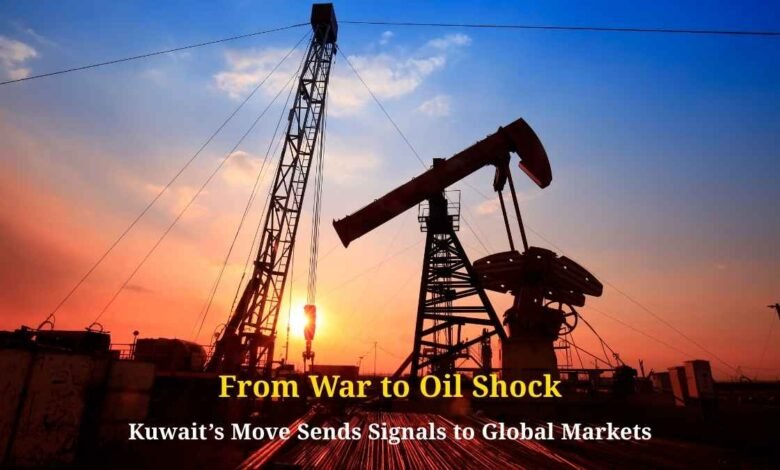
Dubai/Kuwait City: The deepening war between Israel, the US and Iran in the Middle East is no longer limited to missiles and drones, but it has started closing the world’s ‘lifeline’ i.e. crude oil veins. After Qatar, the oil stronghold Kuwait has taken a shocking decision that has created a stir in the international market.
The Kuwait Petroleum Corporation (KPC) has announced a major cut in crude oil production citing rising security threats in the ‘Hormuz Strait’.
Shadow of war on maritime trade
Kuwait’s move is not just a trade decision, but a defensive strategy to keep itself safe amidst war. According to KPC, due to ongoing tensions between Iran and Israel, the world’s most sensitive oil route ‘Hormuz Strait’ is now becoming a ‘death trap’ for ships.
About 20% of global oil supplies pass through this narrow path. Kuwait fears that if tensions escalate further, there may be attacks on its oil tankers, which is why it has chosen the way for risk management by reducing production.
Next number in the queue of Iraq and UAE?
Market experts believe that Kuwait is not alone. Production in Iraq has already fallen by 15 million barrels per day. It is now speculated that the United Arab Emirates (UAE) may also change its oil policy soon.
If the Gulf countries start pulling hands one by one, then the prices of petrol and diesel in the world can increase at the speed of rockets.
Fear of ‘double kill’ and darkness for Pakistan
The most painful picture of this global crisis is seen in Pakistan. Qatar has already issued a ‘Force Major’ notice to stop LNG supplying Pakistan’s power system. Now Kuwait’s decision is like the last nail in the coffin for Islamabad.
Pakistan meets a large part of its energy needs from refined petroleum products coming from Kuwait. About 40 to 60 thousand barrels of oil reach Pakistan every day from Kuwait.
Supply decreases simply means stopping the wheel of vehicles on the roads of Pakistan and locking industries. It is now impossible for this country to buy oil at expensive prices.
Why is this crisis reminded of 1973?
Experts believe that the current situation is becoming like the 1973 oil crisis. Even then, oil was made a weapon for geopolitical reasons. The only difference today is that this cut is happening in the name of ‘forced’ and ‘security’.
If the Hormuz Strait is completely blocked, global GDP may see a major decline.